Software Testing
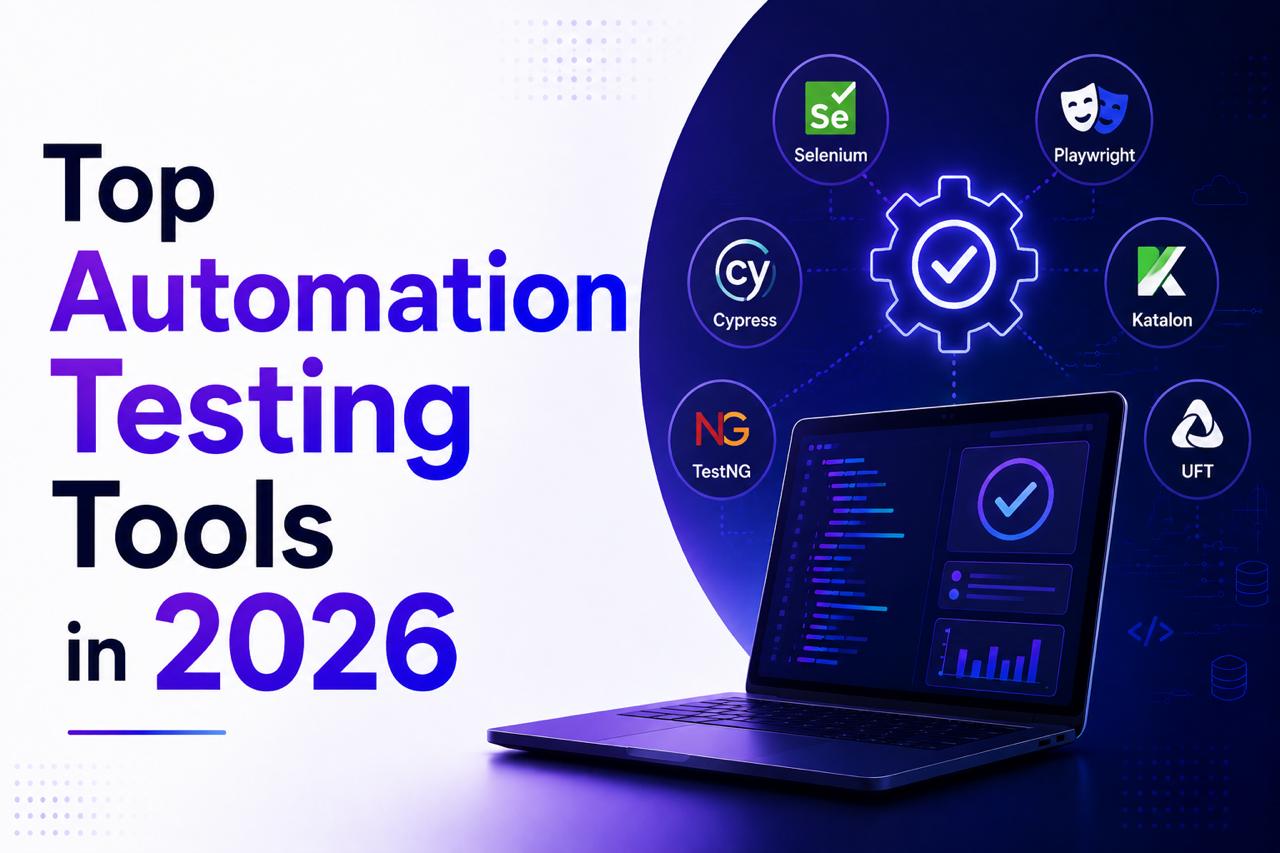
Automation Testing has become one of the most important parts of modern software development. As companies move towards faster development and continuous deployment, the demand for powerful automation testing tools is growing rapidly. In 2026, businesses are focusing on tools that support AI-powered testing, faster execution, cloud integration, and cross-platform compatibility.
Some of the most trending automation testing tools in 2026 include Selenium, Cypress, Playwright, Appium, and TestComplete. Selenium remains one of the most widely used open-source testing tools for web applications because of its flexibility and support for multiple programming languages. Cypress is becoming highly popular for modern web testing due to its speed and developer-friendly interface, while Playwright is gaining attention for advanced browser automation and cross-browser testing capabilities.
Modern QA Automation for Scalable Software Testing
What is Software Testing and why is it important?
Software Testing is the process of evaluating and verifying a software application to ensure it works correctly, efficiently, and securely according to the specified requirements. It helps identify bugs, errors, and performance issues before the software is released to users. Software testing is important because it improves the quality, reliability, and security of applications while ensuring a smooth user experience. It also reduces development risks, minimizes maintenance costs, and helps businesses deliver high-performance software solutions with confidence.
What are the different types of Software Testing?
Software Testing includes different types of testing methods used to ensure the quality, performance, and security of an application. The main types include Manual Testing and Automation Testing, where applications are tested either manually or using automated tools. Other important types are Functional Testing, which verifies software features, Performance Testing to check speed and stability, Security Testing to identify vulnerabilities, Usability Testing to improve user experience, and Regression Testing to ensure new updates do not affect existing functionality. These testing methods help deliver reliable, secure, and high-quality software applications.
What is the difference between Manual Testing and Automation Testing?
Manual Testing: is a testing method where testers manually check the software application for bugs, errors, and usability issues without using automated tools. It is mainly used for exploratory, usability, and user interface testing where human observation is important. In contrast, Automation Testing uses specialized tools and scripts to automatically execute test cases and verify application functionality.
Automation testing: is faster, more accurate, and suitable for repetitive and large-scale testing processes. While manual testing requires more time and human effort, automation testing improves efficiency, reduces testing time, and is ideal for continuous testing in modern software development.